Showing posts with label Research. Show all posts

Wednesday, 15 August 2018

Research: Categories and Humphrey Spender

This research point is to review the work of Humphrey Spender and write a short summary in our learning logs referencing the web site:

http://spender.boltonmuseums.org.uk/

However this link is no longer valid. I have therefore used the following site, published by Bolton Council, who now own the images, for references for the photographer and his work.

https://boltonworktown.co.uk/about/worktown-people/humphrey-spender-1910-2005

The above site is well organised and also gives a very good mini biography of Humphrey Spender. As this section in the OCA course relates to categories it is worth listing out the categories that Spender's work has been put into. These are:

Blackpool, Ceremonies, Graffiti, Industry, Leisure, Observers, politics, Pub, Religion, Shopping, Sport, Street, Work

The images taken mainly follow a strict documentary style and it is obvious why nearly 100 years later that these have a significant importance. Spender was very sympathetic to the Northerners of Bolton and believed at an early stage that photography would help bring more awareness of social injustice and in the imbalance of wealth.

Many of his images have fantastic spot lighting, probably natural ad give a very warm and sympathetic view to life at these times.

The categories intrigued me, especially Graffiti. After reviewing the images it is quite amazing to see how the art of Graffiti has changed. Here we have simple drawings made in white chalk drawn mainly on brick walls. They are largely inoffensive and humorous;  I wonder what Spender would have made of modern spray canned multi-coloured works of art that adorn our cities today?

I was disappointed in the "Street" category, it was just images of people in a street; I suspect I was expecting something more along the lines of modern street photography. However I found the observers section very interesting.....

The Observers - Humphrey Spender


Wednesday, 25 July 2018

Exercise: Information and expression

This is a two part exercise. First to read John Marz's essay on Sebastiao Salgado and secondly to research into the work of Salgado and give evidence of this in our learning log.

Salgado was a highly intelligent person, gaining a Phd in economics that would have given him a handsome salary. Instead of this path he chose the world of photojournalism, to his love of photography and its use to document the poor and unfortunate of the world. Coming from Brazil, a poor country in itself would have given  Salgado  a compassionate understanding of what it is like to be in such a position. As Marz points out his photography is "pictured through Latin American eyes".

Salgado's first published work was the "Other Americans" in 1985.  This work demonstrates well the interest in Latin American, its title reaching out that there is more to the America's than just the USA, a direct play on Robert Franks work no doubt. The images are well staged and capture an atmosphere of neglect, perseverance and struggle. All taken in black and white they are crisp and well defined. The do not demonstrate war or violence just poverty but in a kind and sympathetic way reporting back to a wider community of the everyday struggle of the Latin Americans.

A great source of the images can be found at http://monovisions.com/sebastiao-salgado-other-americas/. I found the image of half naked children playing with bones for toys quite disturbing, whereas the following image could be taken for a modern "photo-bomb" and I wonder if it was staged this way or not. The contrasts between the sad and happy faces cause tension in the image and I cannot fathom it out; perhaps this is the intention.

The Other Americans - Sebastiao Salgado 
Marz calls out individual images and questions why they are all so dour. The girl though in this image gives a light heartened smile to liven things up.

Salgado's other publication of note was "Terra" in which he documented the native's of Brazil and Ecuador in their struggle to gain land that was taken by historical colonisation. This would be similar to that of the native North Americans.

Salgado is also renowned  for the work in worn torn cities and spaces of violence and destruction. There is a very good article that I have read from the guardian on this with the title "Viewer or Voyeur" ref: https://www.theguardian.com/artanddesign/2010/mar/08/world-press-photo-sean-ohagan

This is an interested piece that discusses Salgado's world of photography and whether we look at the gore of such images with disdain or with a lust for more?

The following statement from Salgado sums this up very nicely.

In the course of my various reportages, I had witnessed so many tragedies that I believed I was now accustomed, but I hadn’t expected to encounter such violence, hatred, and brutality.” – SebastiĆ£o Salgado 


Tuesday, 19 June 2018

Exercise: Marcus Bleasdale

The exercise is to read an article published in Eight Magazine on the photojournalist Marcus Bleasdale [b. 1968]. Although not strictly instructed to do so I have made short notes on his views below.

Marcus Bleasdale

Originally a banker with a keen hobby of photography. Resigned from his post at being disillusioned on how banks ignored the human aspect of war over currency fluctuations. Two days later he was in Kosovo.

Finance was an initial problem. Views that conflict and photojournalism do not go hand in hand quoting the work of Eugene Smith.

References Joseph Conrad's book Heart of Darkness as inspiration in words of what the mind describes. Bleasdale's book One Hundred Years of Darkness follows in these footsteps through the Belgian Congo with each image taken referencing a part of the original novel.

Strong views on areas that the media ignores where genocide may have taken place, almost certainly over the mineral wealth of the country. Cites Dafur where Bleasdale visited off his own back, not able to get any commission. From this he created the work "Human Rights Watch" that earned him Best Photography Book in 2010 by POYi (pictures of the year international)

Took the work HRW and forced this onto audiences that were directly responsible for the conflict mining in the Congo, namely a Swiss Bank. Blames many organisations including the UN for failing the people of the Congo.

This has lead to success in organisations no longer trading gold with Uganda as it was also coming from the Congo. This leads to less money being available to finance war in the Congo.

Feels a strong responsibility to report the helplessness of Africa over war, famine, and disease.

Has published just three books but a raft of awards from 2004 to 2015 for his work.

Marcus Bleasdale - Human Rights Watch

Wednesday, 16 May 2018

Gordon Parks

Reading through some of the material in the course has led me to look closer at the American Farmers Association, a group of photographers capturing images of social injustice from 1942-1944. I chose to look closer at Gordon Parks as his work tended to also group racial injustice alongside poverty and social justice. It would have been a time in America only 70 years ago that questions the segregation by race and restricted privileges.

Parks [b. 1912 Kansas] was himself born into poverty, this would have surely driven him to search for a better way, and what better than to translate his emotions and political views into documentary. His images are largely of African Americans, many show oppression and sadness but in contrast many show life in the face of adversity and the challenges of living in an America as a black person.

The following image was taken from an archive known as Fort Scott 1950. The use of light is fantastic, and the way in which the two people seem disconnected gives a slight juxtaposition, perhaps with the woman wanting something better with her life.

Gordon Parks - Tenement Dwellers, Chicago 1950

The second image taken from the FSA series just warms me. This is one of Park's more famous images for obvious reasons, one of the lighter ones.

Gordon Parks - Woman & Dog in Window, Harlem New York 1943

I found Park's best work though was Segregation Story 1956. A brilliant collection recording in true documentary fashion what it must have been like for Black Americans during this awful time of being classified as a different human being. It is truly work like this that opens doors and opens minds increasing awareness of social injustice to a level that forces change for the good of mankind. Documentary has a lot to live up to and a tremendous role to play in our society as we strive to improve living standards and share more of what we have.

Gordon Parks - Department Store Alabama 1956 

Gordon Parks -  Segregated Drinking Fountain, Alabama 1956

Monday, 19 March 2018

The Walk Home

Walking home late at night I was made very conscious of street lighting hidden behind trees, causing a great diffusion of light. Using my smartphone I decided to take images as if the street lighting was a bright heavenly body, shining in the still of the night. I continued with taking images until I got to the road I live in.

I tried to obfuscate any street lighting poles or direct nearby lights to give the impression of a night sun as much as possible and left all of the images completely untouched in term of processing.

I was quite pleased when I looked at these the following day and thought they could be used here on this learning log as a document of my night journey home...here are the four best.


Sunday, 18 March 2018

Shawn Hubbard: Making the Cut

Shawn Hubbard is an American photographer than concentrates on capturing raw emotions and memorable moments associated with sports. I was given his name by my tutor in regard to the upcoming assignment to evaluate his work.

His style is becoming more and more fashionable in sports photography. Previously the job of a sports photographer was to capture the magic moment of the goal, touch-down, tackle contentious moments such as fouls. Capturing the action was the primary focus using fast large lenses mounted on mono-pods from single positions, and this would be the only images captured....


Now though we seek more and the role of the modern sports photographer becomes more of story teller, capturing moments on and off the pitch in less technicality and more emotional imagery.

Shaun Hubbard's images capture the essence of a sporting day. He has captured some bright and powerful images of NFL American Football, mixing in some traditional images with those off pitch displaying the emotions of players, managers and supporters and behind the scenes shots in locker rooms.

The work of Hubbard I found most interesting though was "Making the Cut", a series of images telling the story of the cheerleaders. Starting at what looks like covering specialist training, coaching, auditions and finally graduating to a match. Not knowing their culture we may be excused for thinking that this is a 'chick' pastime but it is not. The images show the hard work, determination and more importantly the team spirit and drive to be the best. The images also portray a group of individuals that are supportive of each other in their quest to be chosen. This is the attribute of North Americans that I admire the most; their genuine praise and happiness for those that succeed around them even when they themselves may fail.

There are too many images from this collection to show, but hear a few that I really enjoyed.

Images Shaun Hubbard https://www.shawnhubbardphoto.com/Stories/Making-The-Cut


Sunday, 27 November 2016

Research: Felice Beato

In the first section of this course we are invited to reflect on some of the names mentioned as early practitioners of documentary. Most of them I have heard of and researched on other OCA courses, such as as Timothy O'Sullivan and William Henry Jackson.

I was though drawn for no particular reason to the work of Felice Beato [1832 - 1909] who documented the Crimean War with James Robertson, following the departure of Roger Fenton, another photographer mention in the notes.

Beato, moved on to China in 1860 on his own, documenting the Opium War, arriving in Hong Kong in March of that year, before heading off north to Tailen Bay, Pehtang and Peking. The images taken were certainly some of the earliest of China, quite possibly the first.

The images are quite graphic and document the Opium War in traditional documentary style but also have an air of creativity about them. The images form a narrative recreation of the battles in which forts are breached with Chinese soldiers defeated lying strewn unceremoniously.

As so much time has passed these images play an important role in the preservation of history and a provoking medium as an insight to what may have happened.

Interior of Pehtang Fort 1860

The Entrance of North Fort 21st August 1860

An-Ting Gate of Pekin 1861 occupied by allied forces.

Sunday, 10 July 2016

The Head Image of this Blog

I have still yet to open the OCA box of goodies and get started with this module, but I am genuinely excited for this section of the OCA photography courses as it encompasses so much of what I admire about photography.

In creating the blog I wanted an image that would stand out, also one that could be cropped wide and narrow. It was fascinating looking through Google images at a raft of sites and practitioners; that is where I stumbled upon the image used in the header of this blog. It was taken by Vivek Singh [b 1980] as part of a series entitled "Beyond Chicken's Neck".

Vivek Singh is from Haryana, India. Originally he started in television news production, with photography taking over around 2006 when he worked for Local Indian publications in Delhi. He was the winner of the Manuel Rivera Grant for documentary photography in 2013. He continues to work for many major papers and media companies globally as a photo journalist

The series was taken in a North Eastern Province of India known as the Siliguri Corridor or Chicken's Neck, an area consisting of Seven States that are far from peaceful. Vivkek describes this area as one of violence spanning decades that has claimed thousands of lives, with many of the survivors left with scars taking decades to heal.

The series describes the mindless murder and rape of adults, children and the old during the early months of 2014. The images are very vivid and capture a community that is almost desolate, dispensing its own tribal justice, cut off from the civilisation of modern India.

Vivek's work is predominantly B&W and quite raw, that is probably what I admire about it. Many parts of the images are out of focus, including the header but it still works and is extremely powerful. Sadly there is no mention of what the gathering was in the header image perhaps that is left up to the imagination of the viewer.

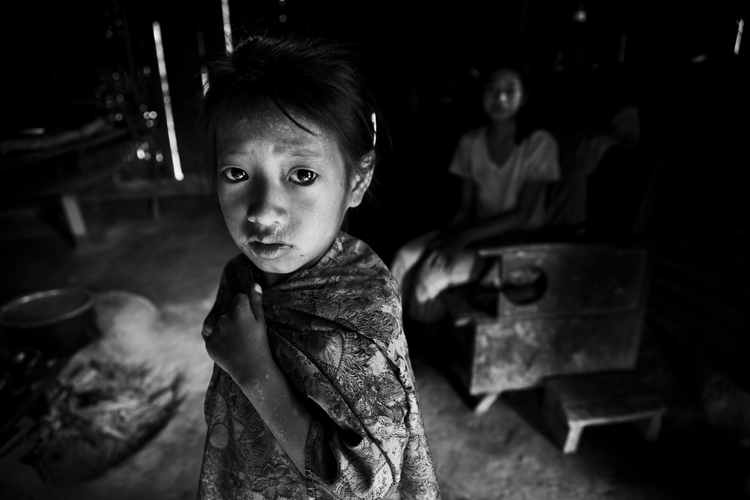
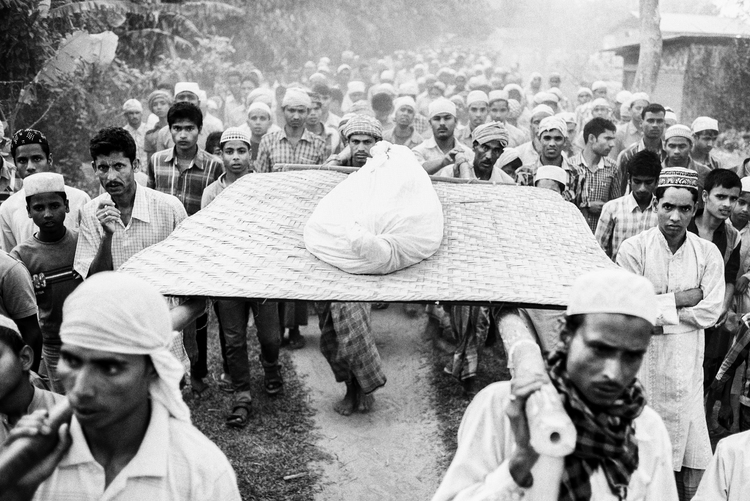
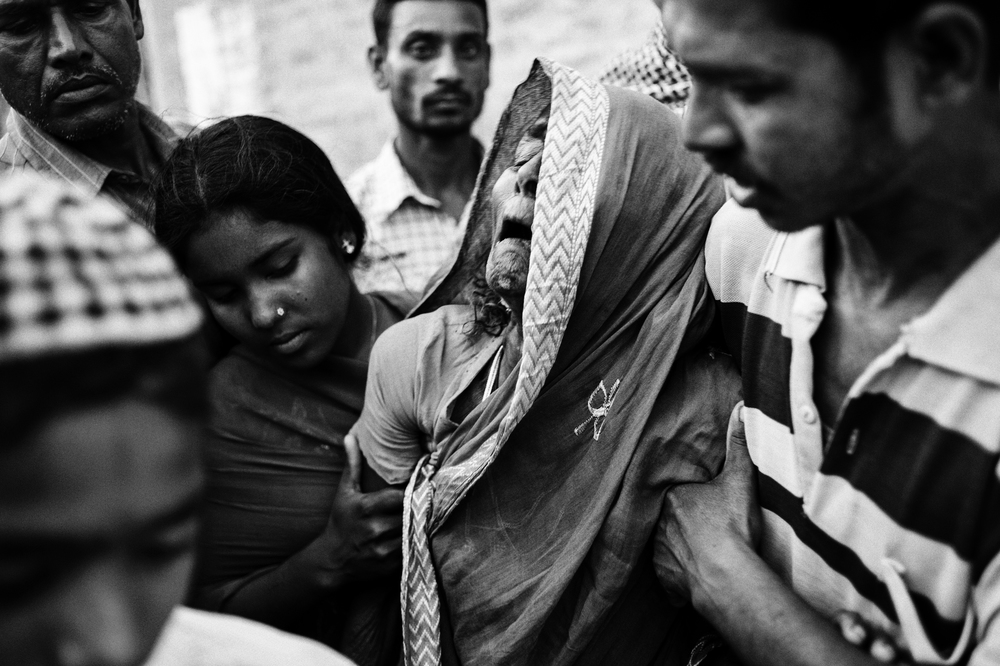
Below I have selected my favourite three images from the series, they seem to call out the pain that is the never ending circle of their violent lives. The series and all of Vivek's work can call be viewed at:

http://www.viveksinghphoto.com/

beyond_chickens_neck_nagaland_vivek_singh_freelance_photojournalist_delhi_india (12).jpg

beyond_chickens_neck_vivek_singh_india_freelance_photojournalist_delhi (3).jpg

beyond_chickens_neck_vivek_singh_india_freelance_photojournalist_delhi (4).jpg